Making Audio Recording a Part of the Daily Routine
When communicating with family members far away, young children often struggle to focus on a phone screen for long periods. Video calls sometimes feel rushed, or the child's attention wanders elsewhere. Instead, preparing a short audio recording during a calm moment of the day, such as before a midday nap or at bedtime, creates a warm bridge for both the child and the distant grandma. This method allows the child to speak at their own pace and tell a story without feeling rushed.
It is important not to make this process complicated or feel like a chore. By keeping your phone's voice recording app open, you can record even the tiniest detail the child shares about the toy they are holding at that moment. The goal is not to tell a long and flawless fairy tale, but to share the child's daily tone of voice, laughter, and current world with loved ones far away. Thus, grandma also participates in her grandchild's growing journey through sounds.
A Small Microphone Area and Preparation Routine
Designating a special corner inside the home for audio recording helps children adapt to this game more easily. A soft pillow thrown into the corner of the sofa or a fabric cover spread on the kitchen table can function as a 'sound studio'. This small detail, which makes your child feel like they are standing in front of a microphone, helps them use their voice more carefully and with pleasure. Turning off sounds such as the television or radio in the background during recording ensures that the sent message is heard more clearly.
You can turn the preparation stage into a fun game. You can show the recording bar to your child by saying, 'Now we are sending a little surprise before bedtime to grandma.' For children who do not know what to say at first, a simple prompt is enough: 'Would you like to talk about the ant you saw in the park today?' or they can be encouraged to murmur a sentence or two from their favorite book.
A Concrete Example: Audio Tale from a Picture Book
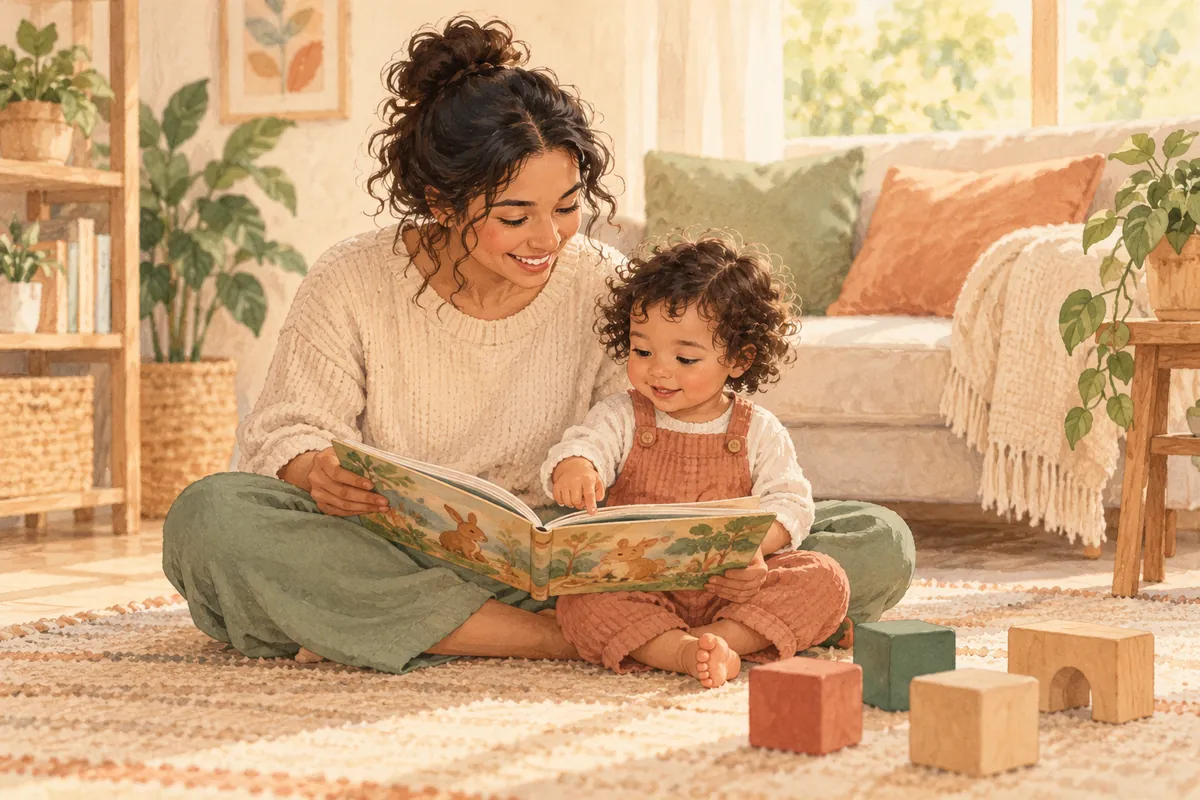
One of the most practical ways to put this idea into practice is to place the child's favorite picture book on the table. As your child turns the pages, they look at the pictures and tell the story in their own sentences; while you record their voice by holding the phone steady. For example, if there is a picture of a bear in the book, the child can add their own interpretation by saying, 'The bear is going to look for honey, grandma, did you know?' This method both supports reading habits and creates a very natural voice mail.
When the recording is complete, keeping the file short makes it an easy surprise for the other person to listen to. These two- or three-minute audio files gift the distant grandma a cheerful memory that she can listen to over and over at any moment of the day. With a short text you will add next to the recording when sending it, you can also note which toy the child liked the most that day.
A Small Adapting Next Step
If this routine is new for your child, you can make very short trials instead of starting with big steps. Experience the process by taking just a ten-second 'Hello grandma' recording on the first day. Hearing their own voice on the phone for the first time usually arouses great curiosity and amusement in a child. Enjoying hearing their own voice, the child will be eager to form longer sentences the next time.
To make this step sustainable, you can note one day a week as 'voice mail day' in your calendar or mind. Over time, these recordings will turn into an invaluable audio archive accumulating changes in the child's voice and growth in vocabulary. For the distant grandma, these small sound waves become the sweetest meeting point that makes distances forgotten.